
Carroll County Criminal Court Records
A criminal court record is the case-level file kept by the court once a criminal matter is filed. In Carroll County, that file can include the charging information or indictment, probable-cause material where public, appearances, bond orders, pleas, motions, hearings, chronological case summary entries, dispositions, sentencing terms, probation terms, and court costs. It is not the same as an arrest record or jail booking entry. Arrest and booking records are law-enforcement or jail records. The criminal court record begins when the case is filed in court and then tracks what the judge, parties, prosecutor, defense, and clerk do in that case.
Carroll County's local trial courts are Carroll Circuit Court and Carroll Superior Court, both at the Carroll County Courthouse in Delphi. Indiana does not use a Carroll County district court for these local criminal cases. The Clerk's Office maintains the court record access channel for filings, judgments, payments, copies, and certified records. Criminal case status and public docket entries are searched through Indiana MyCase. For charge-only context after an arrest, use the Carroll County court charge records page; for all case categories, use the broader court records page.
Indiana Criminal Record Law
The manifest source for Indiana criminal law is Indiana Code Title 35, which includes criminal law and expungement provisions used in Carroll County criminal court records.
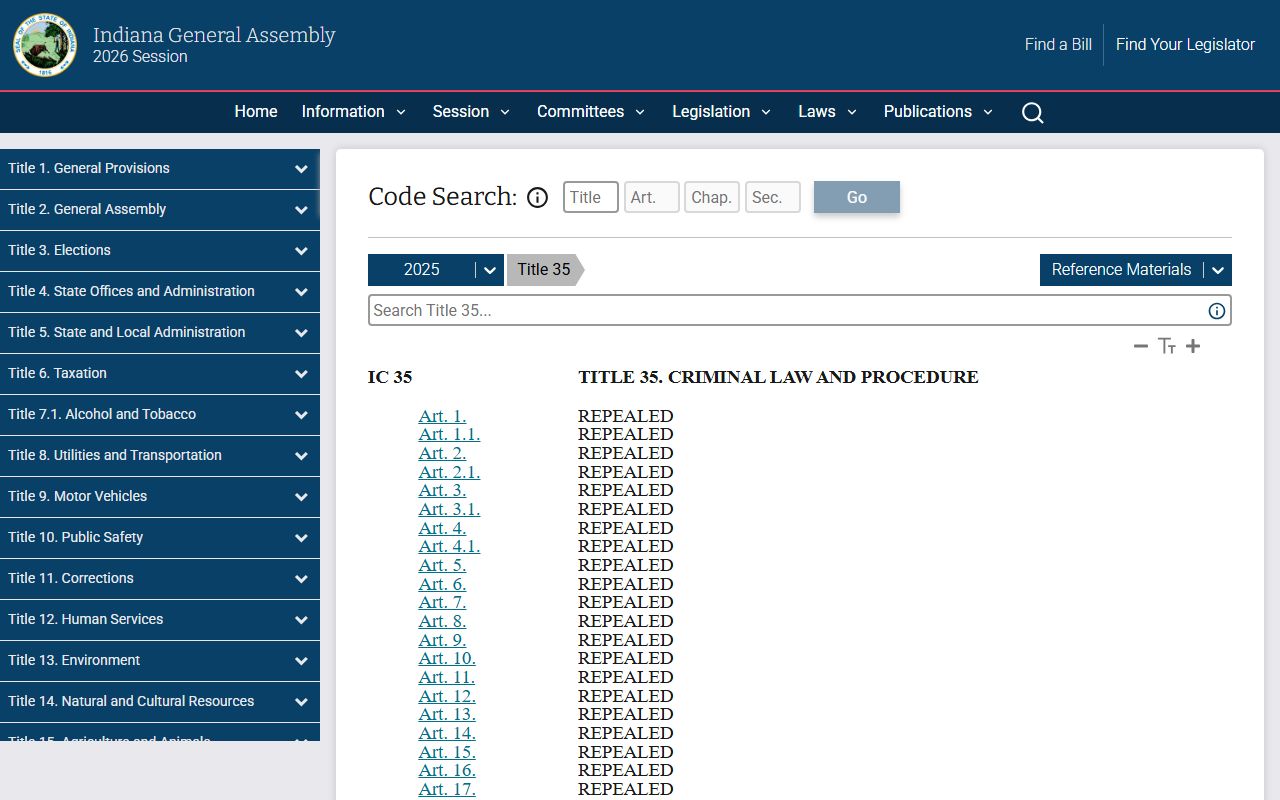
That state law source helps distinguish criminal charges, sentencing, and expungement rules from the public case-search process.
Search Carroll County Criminal Court Records
Use Indiana MyCase for public criminal case information. MyCase is the official statewide case search for Odyssey courts and can show case summary data, charges, CCS entries, hearing events, disposition events, sentencing events, bond information, financial activity, and documents when public and available. Search by case number if known. Search by defendant name when the case number is not known, then narrow by Carroll County or by the local court when possible.
- Open MyCase and choose Case or Name search for the criminal court record.
- Enter the case number, or enter the defendant's last name and first name.
- Use Carroll County, Carroll Circuit Court, or Carroll Superior Court filters when available.
- Open the case result and review the charges, CCS entries, hearings, bond events, disposition, sentence, and financial section.
- Contact the Carroll County Clerk's Office for certified copies or documents that are missing, older, sealed, or not downloadable.
MyCase is not a statewide criminal-history background-check product. It is a court case search. It can show criminal case activity in public court files, but it does not replace a fingerprint-based criminal-history check, an attorney's review, or a certified court copy from the clerk.
Carroll County Prosecutor Role
The Carroll County Prosecutor's Office is the office that files and handles criminal prosecution in the county. The official prosecutor page lists Prosecuting Attorney Nicholas McLeland, Chief Deputy Prosecuting Attorney Stacey Diener, and services for criminal, juvenile, and traffic matters. The office phone is (765) 564-4514, the fax is (765) 564-1871, and the office is located at the Carroll County Courthouse.
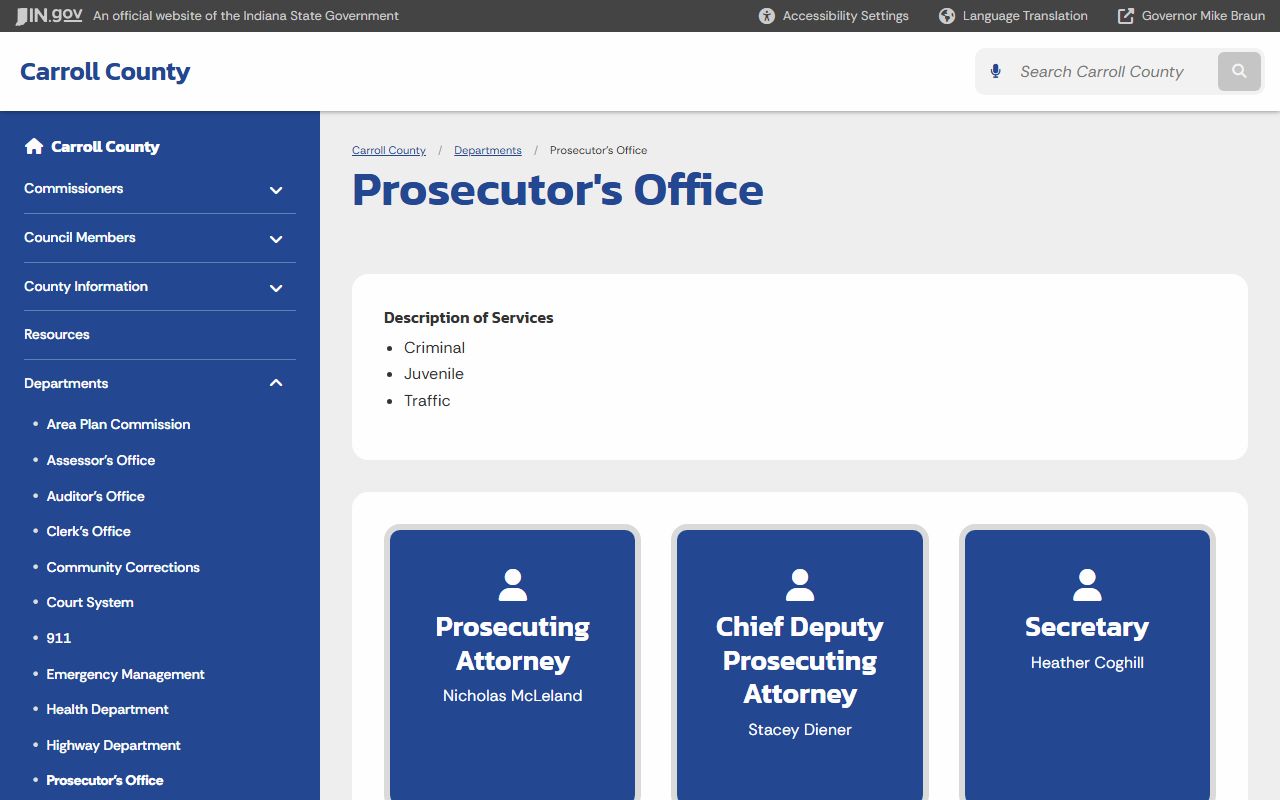
The prosecutor's filing decision is what turns an investigation or arrest into a court case tracked in the criminal court record.
The prosecutor does not maintain the public court file. The prosecutor files charges, responds to motions, appears at hearings, handles plea negotiations, objects or responds in some expungement matters, and manages traffic prosecution or deferral where applicable. The Clerk's Office keeps the court record access path, while the judge controls court orders, hearings, disposition, and sentencing.
Carroll County Criminal Case Flow
Criminal court records should be read in sequence. A charge can change, a hearing can be continued, and an early entry may not reflect the final outcome. The CCS shows the event trail from filing through final disposition. A simple Carroll County criminal case flow is: Charges Filed › Initial Hearing or Arraignment › Pretrial and Motions › Plea or Trial › Disposition › Sentencing.
| Stage | What Happens |
|---|---|
| Charges Filed | The prosecutor files a charging information or other charging document, opening the court case. |
| Initial Hearing / Arraignment | The defendant appears, charges are addressed, bond may be reviewed, and a plea may be entered. |
| Pretrial / Motions | Attorneys file motions, request orders, exchange positions, and set or continue hearings. |
| Plea or Trial | The case resolves by plea, trial verdict, dismissal, or other court action. |
| Disposition | The court records the outcome for the case or each charge. |
| Sentencing | If there is a conviction, the court records jail, prison, probation, fines, fees, or other sentence terms. |
Carroll County Criminal Record Fields
A criminal case file can contain both summary fields and event-level fields. The summary identifies the case. The charge section identifies alleged offenses. The CCS explains the case path. The disposition and sentence entries show the outcome. Some documents may be downloadable, but public access can be limited by Indiana court rules, expungement orders, juvenile law, redaction rules, or the age of the file.
| Field | What It Shows |
|---|---|
| Case Number | The Odyssey identifier for the Carroll County criminal court record. |
| Court | Carroll Circuit Court or Carroll Superior Court. |
| Defendant | The person charged in the criminal case, with addresses or identifiers masked when required. |
| Charges | Offense description, offense date, citation number, statute, degree, modification, original degree, and related status. |
| Bond | Bond number, amount, status date, and related court events when visible. |
| Hearings | Hearing date, type, court, judge, and event detail when public. |
| CCS Events | Chronological filings, orders, motions, continuances, dispositions, sentencing events, and document events. |
| Disposition | The outcome, such as guilty, not guilty, dismissed, amended, or other case resolution. |
| Sentence | Jail, prison, probation, fines, fees, community terms, or other court-ordered penalty after conviction. |
| Financial | Fines, fees, payment history, payable balance, transactions, and collection flags. |
Criminal Case Forms
The official Indiana self-service legal forms page is linked by the Carroll Clerk for people handling court filings without a lawyer.
Forms can support filings, but a filed form becomes part of the case record only through the court process.
Charges vs Convictions
A charge is an allegation filed in court. A conviction is an outcome after a guilty plea, guilty verdict, or other judgment that results in guilt. A Carroll County criminal court record can show charges that were amended, reduced, dismissed, or resolved without conviction. Read the charge section with the disposition and sentence sections before drawing a conclusion.
| Charge | Conviction | |
|---|---|---|
| Meaning | An alleged offense filed by the prosecutor. | A final guilt outcome entered by the court. |
| Record location | Charge section and early CCS entries. | Disposition, judgment, and sentence entries. |
| Can change? | Yes, charges may be amended, reduced, dismissed, or merged. | Changes usually require later court action, appeal, correction, or expungement process. |
| How to verify | Compare the charge to the later docket and disposition. | Request a certified disposition or judgment from the Clerk's Office if needed. |
Read Criminal Dispositions
Disposition means outcome. In a Carroll County criminal court record, disposition may appear for the whole case or for each charge. Common outcomes include guilty, not guilty, dismissed, amended, or resolved by plea. Dismissed with prejudice means the charge cannot be refiled. Dismissed without prejudice means it may be refiled if law and procedure allow.
Sentence information should be read only after confirming the conviction count. A sentence can include jail, prison, probation, fines, costs, treatment conditions, no-contact orders, community terms, or payment obligations. Financial fields may show payable balance and transactions. If the financial section lists fines or fees, payment options may route through Indiana's public payment portal or the clerk's accepted payment channels.
Sealed vs Expunged Records
Indiana expungement law is found in IC 35-38-9. The practical process starts with identifying whether the record is an arrest not resulting in conviction, a misdemeanor conviction, a Level 6 or Class D felony, or a more serious felony. The petition is filed in the court and county tied to the record, and notice to the prosecutor may be required. If granted, the court and agencies mark or restrict the record as ordered.
| Sealed | Expunged | |
|---|---|---|
| Public view | Hidden or limited by court rule, statute, or order. | Public access is limited under the expungement order and statute. |
| Who may still see it | Courts, law enforcement, parties, agencies, or others authorized by law or order. | Courts, law enforcement, licensing bodies, and certain employers may retain authorized access. |
| How it happens | By statute, court rule, confidentiality law, or judicial order. | By a petition under Indiana expungement law and a court order. |
| Carroll County step | Use the case number and court to ask the Clerk's Office about filing or access mechanics. | File in the court tied to the Carroll County record and serve the prosecutor when required. |
Restricted Criminal Court Records
The official Indiana excluded-records resource identifies records and documents excluded from public access in Indiana courts.
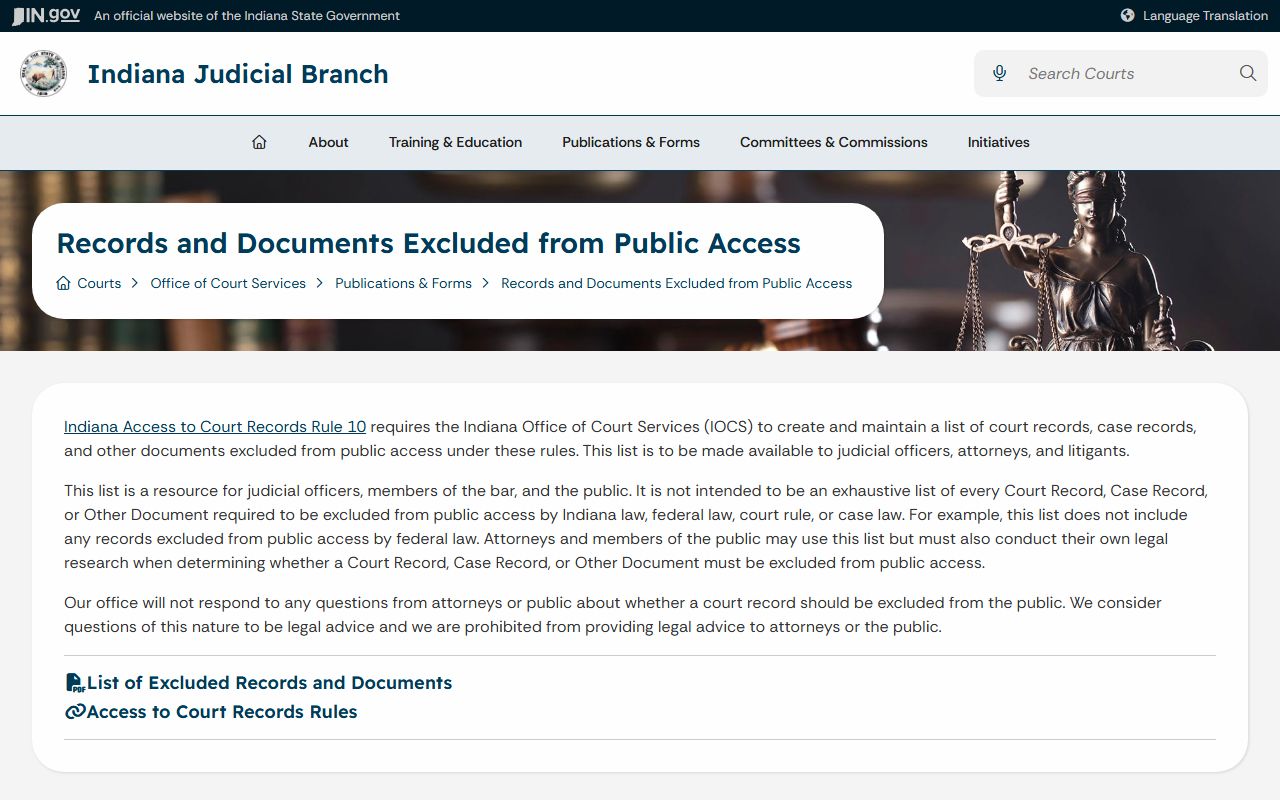
This source explains why some Carroll County criminal court records may show a public case shell while withholding sensitive documents or data.
Restricted criminal court records can include juvenile matters, sealed cases, expunged records, protected addresses, personal identifiers, adoption-related records, mental-health material, and records made confidential by statute or court rule. Active investigations and safety-sensitive records can also be limited. A person who needs a restricted record may need party status, attorney authority, agency authority, or a court order.
Public Access to Criminal Records
Public access to Carroll County criminal court records is governed by Indiana court access rules, not just general open-records law. Access to Court Records Rule 4 supplies the general access rule for court records. Access to Court Records Rule 5 lists excluded categories. Indiana's Access to Public Records Act in Indiana Code Title 5 also matters for public agency records, but court records follow the court rules.
Use MyCase first for public criminal case information. Use the Clerk's Office for certified copies, unavailable documents, and older records. Use the sheriff or jail records process for jail booking records, incident reports, bonds, and custody questions. Those law-enforcement records are related to criminal cases, but they are not the same as the court's criminal case file.
Note: A public criminal charge entry should always be read with the final disposition and sentence fields.